Finding Calm Through Personalised Intervention
Community Stories
Special Needs
22 Sep 2026
Caring for loved ones with developmental and learning challenges is never easy. Read on to discover how TOUCH Developmental and Therapy Services has supported Sze Peng, 50, who has an intellectual disability and autism, as she navigates life with Obsessive Compulsive Disorder (OCD).
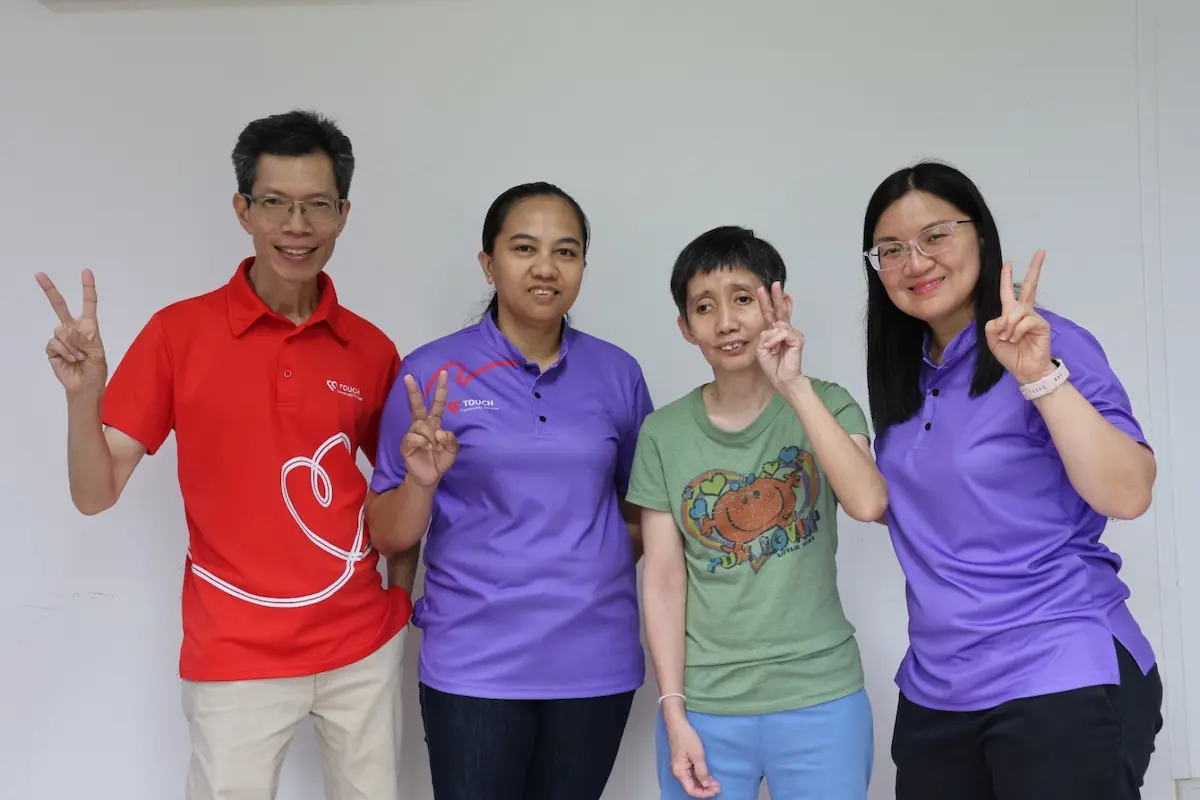
Caption: With support from TOUCH Developmental & Therapy Services, Sze Peng is now calmer and more settled, with a significant reduction in her compulsive sweeping routine.
For 50-year-old Sze Peng, who has an intellectual disability and autism, nights used to be consumed by an overwhelming urge to sweep the floor. Diagnosed with Obsessive Compulsive Disorder (OCD), Sze Peng would spend much of the night sweeping — a routine that disrupted her rest and created tension with her housemates at TOUCH Ubi Hostel (TUH). TUH is a residential training hostel designed for adults with mild intellectual disabilities to experience communal living and develop greater independence.
Sze Peng stays at TUH with three other individuals with intellectual disabilities in a three-room HDB flat. During the day, she works at a sheltered workshop and returns to the hostel after work. On weekends, she goes home to be with her family. However, her night-time cleaning routine continued at home, causing concern and anxiety for her mother, Mdm Chia, 75.
When TUH approached Mdm Chia about trying TOUCH’s Developmental Intervention Service (DIS), she readily agreed. The intervention aimed to help Sze Peng reduce her obsessive-compulsive sweeping behaviour, better regulate her emotions, feel calmer,. Provided by TOUCH Developmental & Therapy Services (TDTS), DIS offers personalised intervention support to enhance daily functioning and learning abilities for individuals with learning and developmental challenges. Supported by TDTS’ team of therapists and intervention specialists, DIS includes Literacy and Math Intervention Programmes, a Neurodevelopment Programme using movement, cognitive training, and diet, as well as consultation for parents.
Doing well progressively
At first, Sze Peng was resistant when TDTS Principal Therapist Mr Isaac Tan assessed her neuromotor functioning and prescribed movements to stimulate her brain and help calm her. But as she gradually warmed up to him, she became more receptive to the exercises. Soon, she began to feel calmer, and her floor-sweeping routine reduced significantly. By the third session, she appeared more cheerful and even said, “Thank you.” The movement exercises had helped her better regulate her emotions and discover a sense of calm she never thought possible.
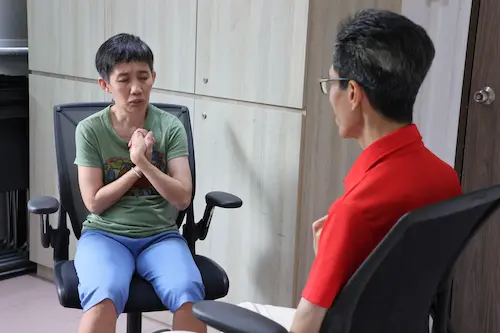
Caption: Sze Peng engaging in a therapy session with Principal Therapist Isaac Tan
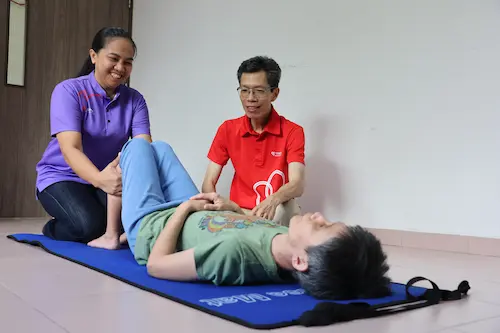
Caption: TUH’s house parent learning how to coach Sze Peng in the movement exercises
“These targeted exercises provide sensory input to the brain, helping to strengthen neural pathways involved in emotional regulation and higher-order functions such as attention, reasoning, and self-control” says Isaac. “I am happy to see that Sze Peng has substantially reduced her obsessive-compulsive sweeping behaviour and is much calmer now.”
Her house parents have also been trained to help Sze Peng practise the exercises at the hostel. She now enjoys the exercises and does them independently on a regular basis. Her mother has noticed a significant difference and is happy to see Sze Peng more settled. Her behaviour is now more predictable, and she spends her time productively, doing other activities instead of cleaning the house throughout the day.
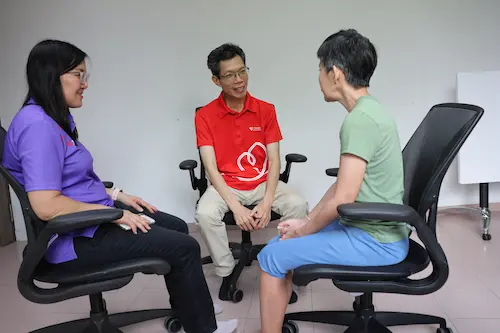
Caption: Sze Peng can look forward to strong support from TOUCH
As part of the intervention, dietary strategies were also introduced, including increasing Sze Peng’s omega-3 intake, which supports brain health. Sze Peng now also enjoys better relationships with her housemates and the people around her. She looks forward to the therapy sessions and is gradually improving.
=====
About TOUCH Developmental and Therapy Services (TDTS)
Set up in 2023, TOUCH Developmental and Therapy Services (TDTS), by TOUCH Community Services, offers specialised intervention and learning support programmes to help children, youth, and adults with developmental and learning challenges improve their daily functioning and learning, and optimise their potential. Aligned with TOUCH’s vision of building strong families and enabled communities, TDTS operates two programmes: Development Support and Learning Support (DSLS) Service and Developmental Intervention Service (DIS). These are tailored to the specific needs of each age group and individual. DSLS caters to pre-school children with mild developmental needs and provides targeted short-term interventions to optimise learning and preparedness for primary education. DIS is targeted at children, youth, and adults with developmental challenges and learning disabilities who are referred by parents, children’s hospitals, schools, and other social service agencies. TDTS runs its programmes in Bukit Merah, Jurong, Toa Payoh, Tampines and Ubi, supported by a professional team of learning support educators, intervention specialists, and therapists.
Story published in 2026