Therapy that works!
Community Stories
Special Needs
22 Dec 2025
Finding a suitable therapy for children with learning difficulties can be challenging for caregivers. Discover how Mr and Mrs Naidu came across TOUCH’s Developmental Intervention Service and its impact on their daughter's learning abilities.
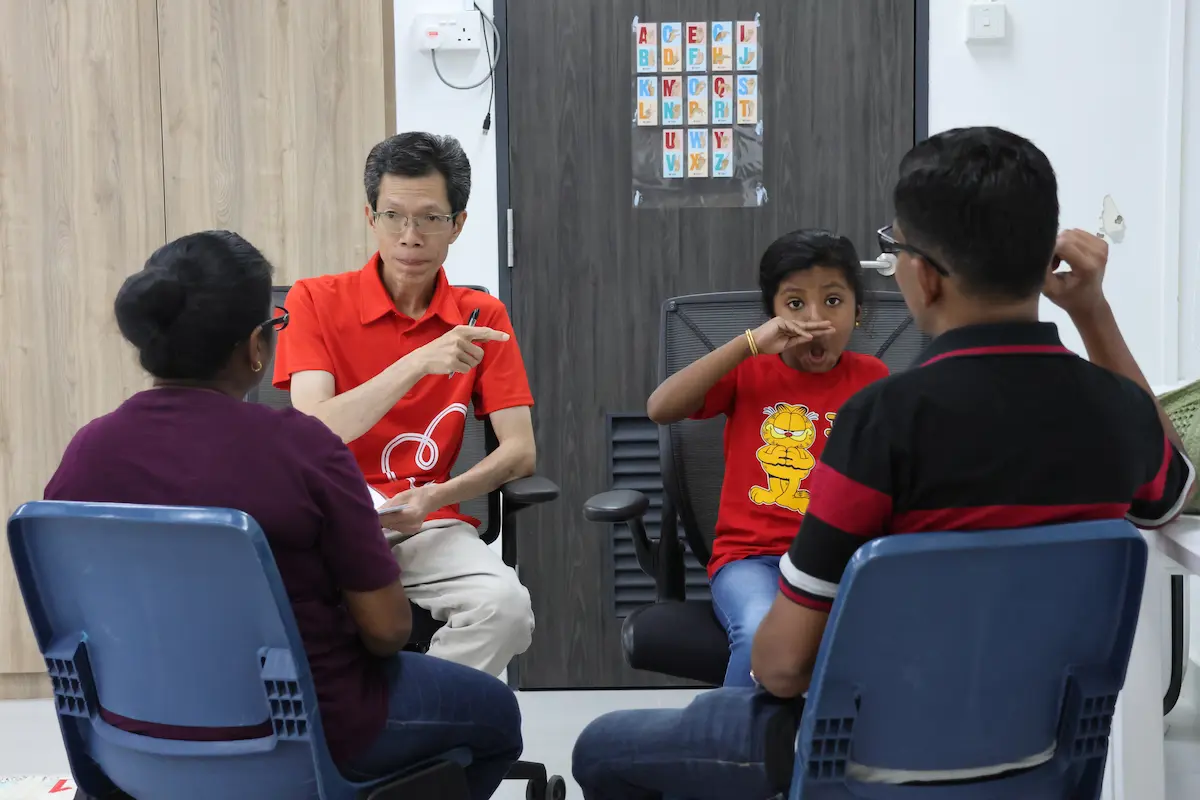
Caption: Becoming a better learner through TOUCH’s Developmental Intervention Service
For years, Mr and Mrs Naidu* tried all kinds of therapy for their seven-year-old daughter Alexandria*, who has a language delay. However, none worked well as she continued to struggle with speaking in full sentences, had short attention span, and faced reading difficulties.
The turning point came when Alexandria’s kindergarten principal referred the couple to the Developmental Intervention Service (DIS) by TOUCH Developmental & Therapy Services (TDTS), which provides personalised intervention services to enhance daily functioning and learning abilities for children with learning and developmental challenges. Supported by TDTS’ team of therapists and intervention specialists, DIS provides Literacy and Math Intervention Programmes, Neurodevelopment Programme using movement, cognitive training and diet, and consultation for parents.
Understanding the gaps
The Naidus soon enrolled in the Neurodevelopment Programme that addresses cognitive and learning challenges by targeting the root cause in terms of brain development. The programme began with TDTS’ Principal Therapist, Mr Isaac Tan, assessing Alexandria on her neuromotor functioning. She was found to have challenges with balance, visual tracking and showed immature reflex patterns. When Isaac examined her visual tracking ability, she showed inefficiency in smooth tracking, which is an important prerequisite for effective reading.
“It’s encouraging to see how committed Alexandria’s parents were in exploring every option to improve their daughter’s condition,” shares Isaac. “I’m glad they enrolled her in this programme early, before she enters Primary One. Building her language and attention abilities at this stage is important, as these are key foundations for learning and school success. Doing this early gives her the best possible start to her academic journey.”
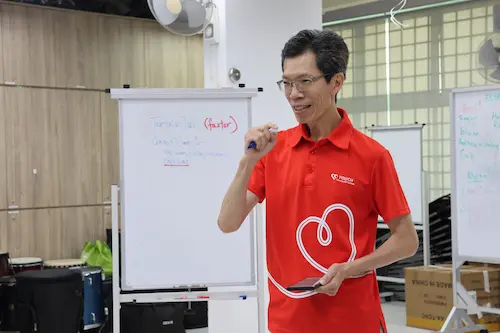
Caption: Principal Therapist Mr Isaac Tan explaining to the Naidus the home exercises and their rationale behind them
Exploring a unique therapy approach
The DIS offers a comprehensive range of intervention programmes and services to support children with developmental and learning needs. For example, the Neurodevelopment Programme helps to address both academic skill deficits and the underlying cognitive challenges. The therapist uses movement, cognitive training and dietary approaches, to help children improve functions such as attention, memory, verbal communication, and emotion regulation.
What stood out for the Naidus was the Neurodevelopment Programme’s hands-on approach in giving parents a role in the therapy sessions. “We’ve always wanted to know what goes on so that we can reinforce the learnings at home. In the past, other therapists would only show us videos and share guidelines. However, our experience with Isaac is different,” says Mrs Naidu.
“He would patiently explain to us Alexandria’s developmental issues and recommend movement exercises and dietary strategies to address them. He takes great effort in guiding us on when and how to apply them at home effectively. This is the most convenient therapy as you can do it with your kid in the comfort of your home. It’s very empowering.”
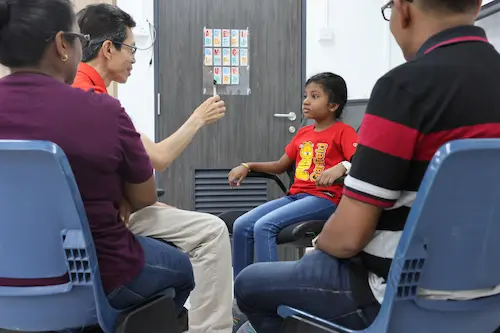
Caption: Alexandria (middle) undergoing a visual skills assessment
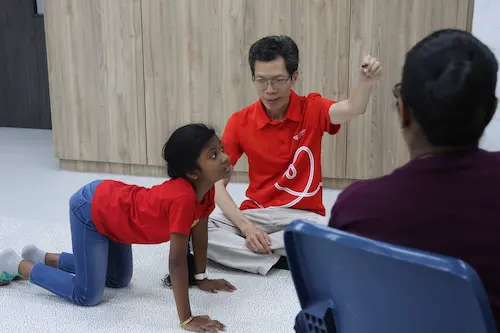
Caption: DIS uses research-based movement techniques as part of the Neurodevelopment Programme to address learning and developmental challenges
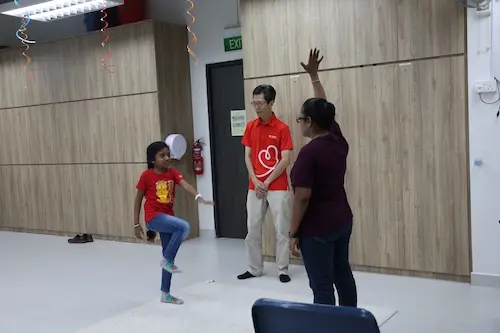
Caption: Mrs Naidu (right) practising Neurodevelopment techniques with Alexandria
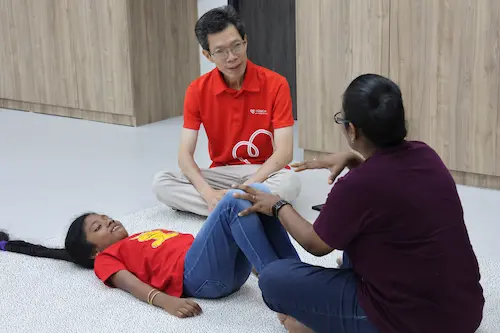
Caption: Isaac (middle) guiding Mrs Naidu on movements that provide sensory stimulation to promote neural development and improve cognitive functions
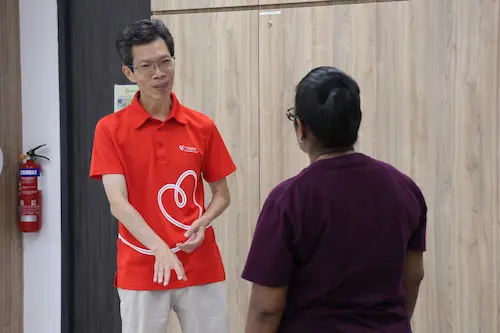
Caption: DIS also offers consultation for caregivers to address their child’s learning and behavioural issues, and recommend intervention strategies to improve learning and development.
Small steps in achieving breakthroughs
Within weeks, there were marked improvements. Alexandria began to speak in full sentences and is more open to sharing her thoughts and interacting with others. Previously, she would give a monosyllabic reply and avoided eye contact. Alexandria’s attention span has also improved. She can now eat and sleep better, and can even draw and colour with greater precision. Her swim coach has also noticed the changes and is impressed.
“It’s amazing to see her improve within weeks of therapy! She enjoys the exercises so much that she would remind me to do them with her at home every day. One day, I even found her bringing a book to the toilet and we could hear her making sounds to form words,” shares Mrs Naidu with delight. “It means so much to us to see her becoming more confident. I hope other parents will also give the Neurodevelopment Programme a try. It might work for them too.”
Published in 2025.
*Names have been changed for privacy purposes.
===
About TOUCH Developmental and Therapy Services (TDTS)
Set up in 2023, TDTS, by TOUCH Community Services, offers specialised intervention and learning support programmes, to help children, youth and adults struggling with developmental and learning challenges improve their daily functioning and learning, and optimise their potential. Aligned with TOUCH’s vision of building strong families and enabled communities, it operates two programmes – Development Support and Learning Support (DSLS) Service and Developmental Intervention Service (DIS) – tailored to the specific needs of each age group and individual. DSLS caters to pre-school children with mild developmental needs and provides targeted short-term interventions to optimise learning and preparedness for primary education. DIS is targeted at children, youth and adults with developmental challenges and learning disabilities, who are referred by parents, children hospitals, schools and other social service agencies. TDTS runs its programmes in Bukit Merah, Ubi and Toa Payoh, supported by a professional team of learning support educators, intervention specialists and therapist.